HubSpot vs Marketo: Marketing Automation Platforms Compared
Comparing HubSpot and Marketo for marketing automation. Mid-market champion vs enterprise leader - which fits your organization?
Overview
HubSpot and Marketo (now Adobe Marketo Engage) represent different approaches to marketing automation. HubSpot offers an all-in-one platform accessible to mid-market companies. Marketo provides enterprise-grade capabilities for complex, large-scale marketing operations.
The decision hinges on your organization's size, technical resources, and integration requirements - particularly whether you're in the Adobe or Salesforce ecosystem.
| Feature | HubSpot | Marketo |
|---|---|---|
| Target Market | SMB to Mid-Market | Mid-Market to Enterprise |
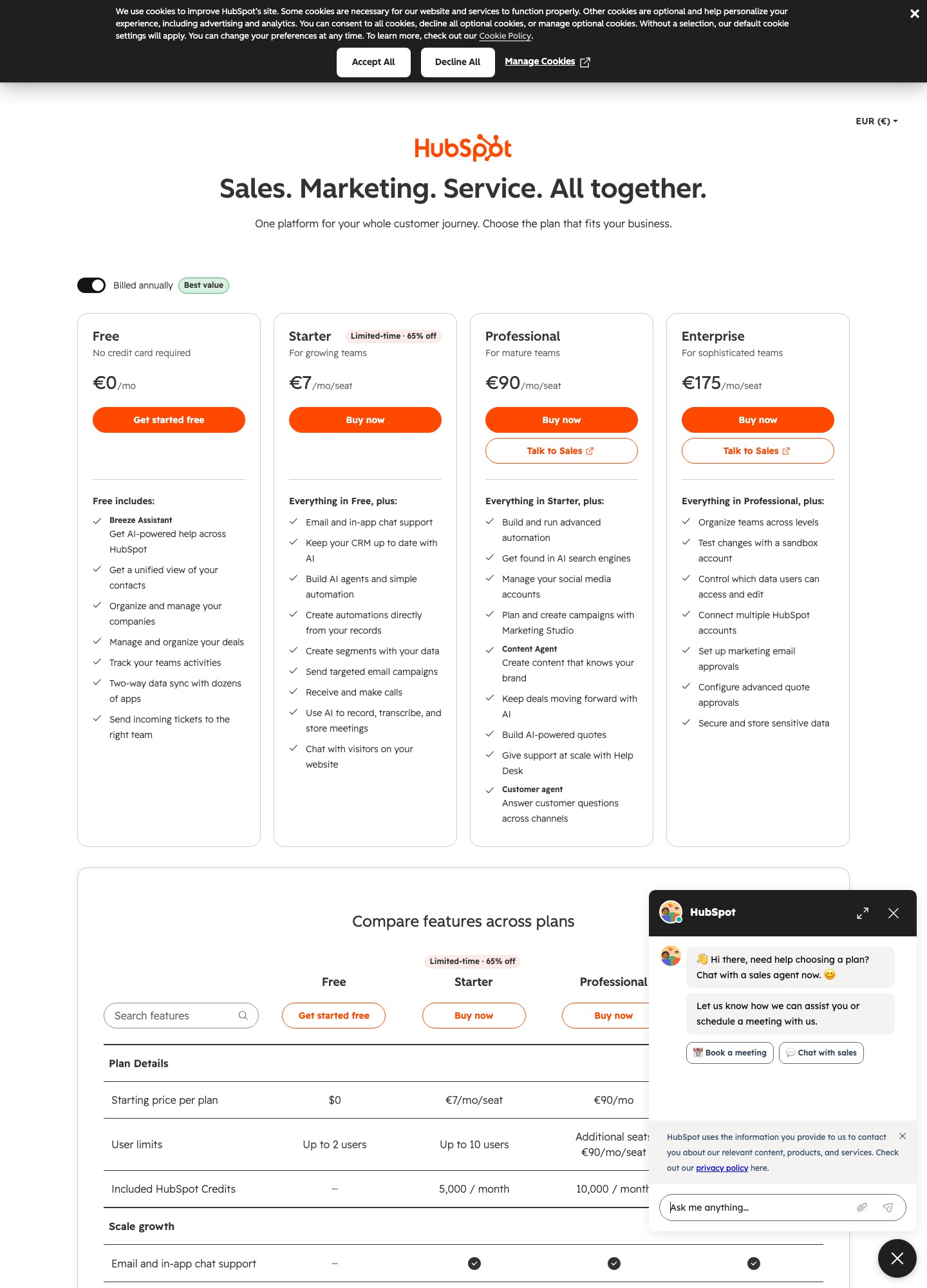
| Starting Price | $7/seat/mo (Starter) | Pricing on request (quote-based) |
| Ease of Use | User-friendly | Complex |
| CRM Included | Yes (free) | No (needs SFDC) |
| Lead Scoring | Good | Advanced |
| Account-Based Marketing | Basic | Comprehensive |
| Revenue Attribution | Good | Advanced |
| Implementation Time | Weeks | Months |
Key Differences
Platform Philosophy
HubSpot is built around accessibility. The interface is intuitive, features are well-documented, and most teams can self-implement. The platform combines CRM, marketing, sales, and service in one system, eliminating integration headaches. This unified approach means your data flows naturally between teams.
Marketo is built for enterprise complexity. The platform handles sophisticated multi-touch attribution, complex lead scoring models, and large-scale personalization. It's designed to integrate with enterprise systems like Salesforce and the broader Adobe stack. This power requires specialized skills to unlock.
Implementation and Operations
HubSpot implementations typically take weeks. Many companies self-implement with occasional support. The learning curve is manageable - marketing teams can operate the platform without dedicated administrators. Resources like HubSpot Academy provide excellent training.
Marketo implementations take months and usually require consultants. Operating the platform effectively needs certified administrators. The complexity that enables powerful automation also demands ongoing technical maintenance. Budget for implementation, training, and administration.
Lead Management
HubSpot provides solid lead scoring, nurturing, and lifecycle management. For most B2B companies, the capabilities are sufficient. The workflows are visual and maintainable. Integration with HubSpot CRM is seamless.
Marketo excels at complex lead management. Build sophisticated scoring models with multiple dimensions. Create elaborate nurturing programs with branching logic. Track engagement across channels with precision. For high-volume, complex sales cycles, these capabilities matter.
Ecosystem Integration
HubSpot has a large app marketplace and works well with most tools. However, it's strongest as a self-contained system. Companies often consolidate on HubSpot rather than integrating many specialized tools.
Marketo is designed to integrate. The Salesforce integration is exceptional - many consider Marketo the best marketing automation for Salesforce users. As part of Adobe Experience Cloud, it integrates with Adobe Analytics, Target, and other enterprise tools.
Pricing Reality
| Tier | HubSpot | Marketo |
|---|---|---|
| Entry | $7/seat/mo (Starter) | Growth: pricing on request (quote-based) |
| Professional | $800/mo | Select and Prime: pricing on request (quote-based) |
| Enterprise | $3,600/mo | Ultimate: pricing on request (quote-based) |
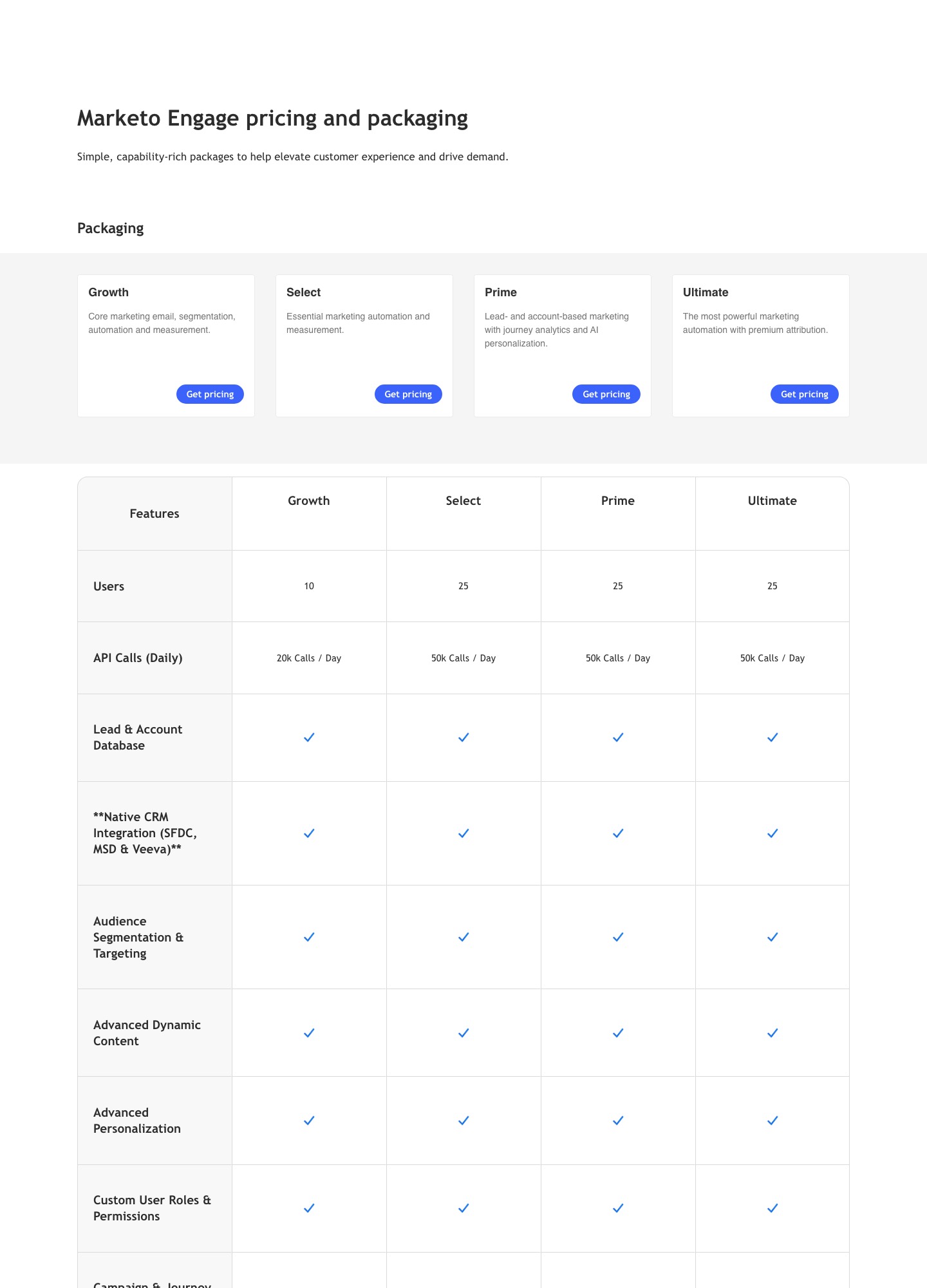
Marketo is pricing on request (quote-based). Adobe's Marketo Engage pricing and packaging page lists four packages and puts a "Get pricing" button under each, with no amounts. What the page does tell you is how the packages differ: Growth covers core marketing email, segmentation, automation and measurement; Select is essential marketing automation and measurement; Prime adds lead- and account-based marketing with journey analytics and AI personalization; Ultimate adds premium attribution. The quote you get is for one of those packages, so decide which capability tier you need before you open the form. Implementation and administration are separate costs to ask about in the same conversation.
HubSpot's pricing is transparent and typically lower, though enterprise features require higher tiers.
Who Should Choose What
Choose HubSpot if:
- You want an all-in-one platform for marketing, sales, and service
- Your team will manage the platform without dedicated admins
- You value ease of use and quick time to value
- Budget is a consideration
- You're not deeply invested in Salesforce
Choose Marketo if:
- You need enterprise-grade lead management and attribution
- You use Salesforce and want the tightest integration
- You're in the Adobe ecosystem
- You have resources for implementation and administration
- Complex, multi-touch campaigns are your standard
The Bottom Line
For most growing companies, HubSpot provides the best balance of capability and usability. The all-in-one platform eliminates integration complexity, and teams can be productive quickly. Professional tier handles sophisticated marketing needs.
Marketo makes sense for enterprises with complex requirements, Salesforce dependency, or Adobe ecosystem investment. The platform's power justifies its complexity for organizations that need it.
Consider your realistic technical resources. Marketo underutilized is worse than HubSpot fully leveraged. Choose the platform your team will actually maximize.
Pricing Deep Dive
The pricing philosophies could not be more different. HubSpot publishes transparent tier pricing and lets you self-serve small tiers; Marketo quotes a package after a sales conversation. Both models reward different buyer profiles.
| Pricing Dimension | HubSpot | Marketo |
|---|---|---|
| Transparency | Published tiers | Quote-based, contactrequired |
| Cost driver | Hub + seats + contact band | Package (Growth, Select, Prime or Ultimate), set in a quote |
| Entry path | Starter tiers from $7 per seat a month (verify) | Custom contract minimums (verify) |
| Onboarding | Optional, tier-dependent | Typically bundled implementation (verify) |
| Scaling factor | Contact count grows fees steadily | Pricing jumps by contract size |
HubSpot's Marketing Hub page shows its prices and says Marketing Hub is priced per seat, so you can model it today. For Marketo, request a written quote for the specific package you need and ask what it includes. Treat every price in this article as a dated readout and re-check it on the vendor's own page before you budget.
Abandoned and Native Ecosystem
HubSpot's ecosystem is its quiet advantage: the marketplace, the CMS, the developer docs, and an enormous pool of admins who already know the platform. When you hire a marketing ops person, chances are they've used HubSpot; bespoke training costs are low because universities, bootcamps, and YouTube tutorials market the platform heavily for them.
Marketo's ecosystem narrows but deepens: certified Marketo admins remain in demand at enterprise scale, and agency partners specialize in its quirks (especially smart campaigns and lead scoring models). If you have or will hire a dedicated Marketo ops specialist, the platform rewards them; if you expect a generalist marketer to run automation, HubSpot fits better by default.
Matchup FAQs
Which is cheaper for a small-to-mid B2B team?
Almost certainly HubSpot. Marketo's contract minimums exist for enterprise database sizes; HubSpot's Professional tier is its smallest serious automation tier. But "cheaper" often reverses at scale where contact bands compound — check HubSpot's current pricing page and get a Marketo quote at your exact list size rather than trusting internet guesswork.
Can Marketo hand-off leads to Salesforce better than HubSpot?
Yes when SFDC-only. Marketo's native Salesforce sync is precise and deeply integrated, since both sit under Adobe and Salesforce ecosystems. HubSpot also syncs to Salesforce well, but a HubSpot-centric stack usually replaces rather than augments your CRM. Verify current Salesforce sync capabilities in each vendor's official docs.
Do I need a dedicated ops person for Marketo?
Yes in practice. Between smart-campaign hygiene, lead-lifecycle token conventions, and program structure, Marketo's power demands continuous daily attention. HubSpot is friendlier to generalist marketers. Confirm with your own team: if you cannot commit 0.5+ of an ops headcount, prefer HubSpot and treat Marketo's pricing savings as an illusion at your scale — check official pricing pages for both before deciding.
Compare more automation tools
See all our head-to-head comparisons to find the right fit.
View All Comparisons